
The Prospect
How to complete the Prospect section of a Situation Appraisal in the DECIDE App.
The Prospect section describes the opportunity and where it stands. It is the first part of a Situation Appraisal.
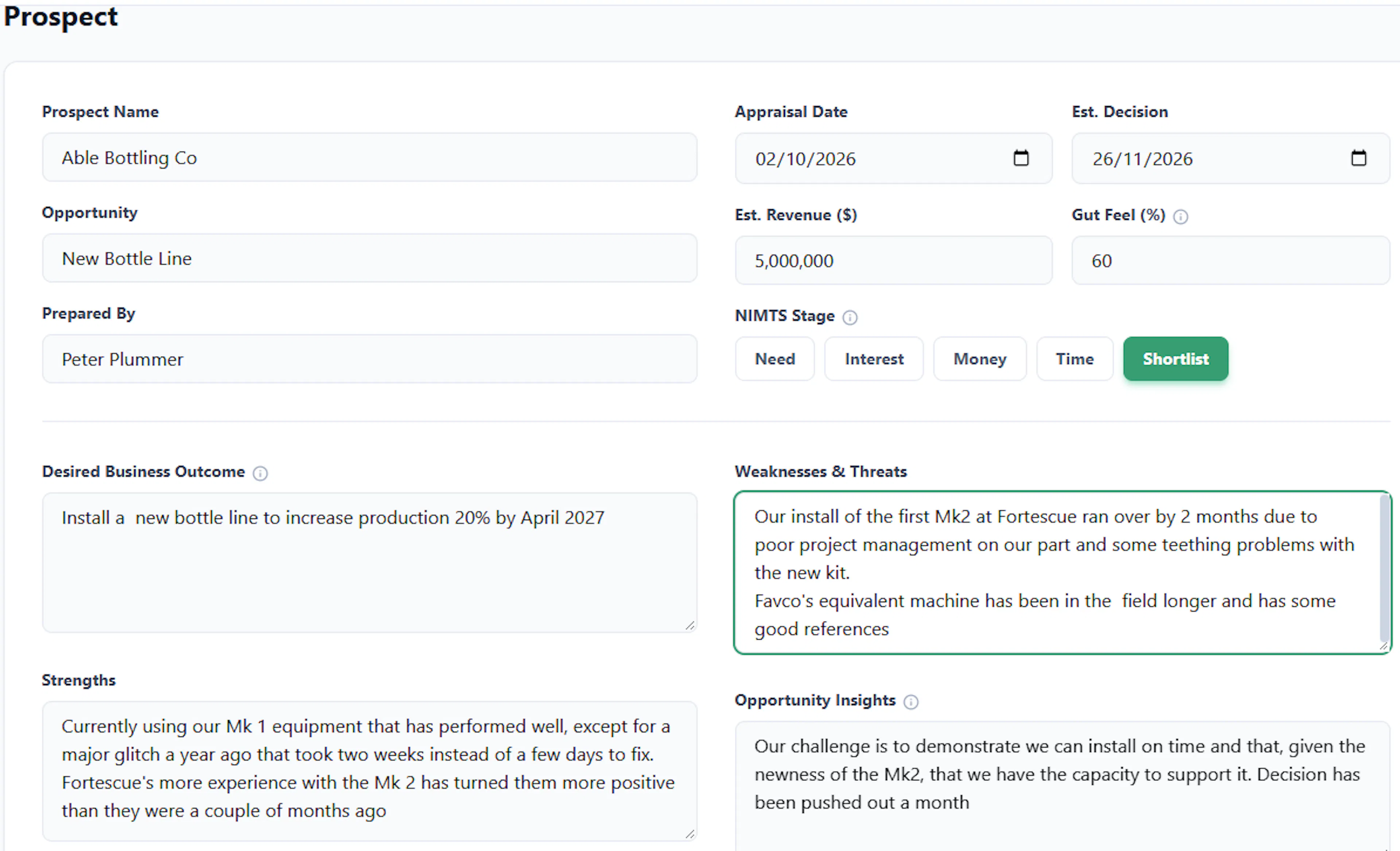
Opportunity details
- Prospect Name: the organisation you are working with.
- Opportunity: a meaningful name you will recognise later, such as "New Bottling Line".
- Prepared By: this defaults to your name.
- Appraisal Date: the date of this appraisal.
- Est. Decision: when you expect the Buyers to decide.
- Est. Revenue ($): what you expect the opportunity to be worth.
Hover over the "i" icon beside a field if you want more detail on what it asks for.
Gut Feel
Enter your gut feel as a percentage. This is your own subjective view of the chance of winning this opportunity. The AI Coach compares your gut feel with its own analysis, which can be very revealing.
NIMTS Stage
Choose the stage the opportunity has reached: Need, Interest, Money, Time or Shortlist. This is the organisation perspective and all organisations follow this sequence. It begins with need and initially an organisation may not even recognise it has a need (but you do!). When the need is recognised, the next consideration is: 'are we interested in doing anything about it?' If yes, then thought turns to money; what the need is costing or might return, and/or what is it worth to fix it?
When money (i.e. a budget, say) is established, organisations start thinking about time frame to act. And finally when they do act, they explore options and eventually consult a shortlist of vendors.
NIMTS should not be confused with the DECIDE steps, which reflect the progress of individual Buyers. While the two need not be in lock-step, the relationship between them is important. See Buyers and organisations for how the two fit together.
Desired Business Outcomes
This is the business result the prospect wants. It is not what you, the Seller, want from the sale. It is not about your objectives. It is about the prospect organisation's objectives.
Example. "Install a new bottling line to increase production 20% by April 2027."
Strengths, Weaknesses and Threats
Describe these in natural language, the way you would explain them to a colleague. The more detail you give, the more the AI Coach has to work with.
Example. An earlier installation for this customer ran two months over because of poor project management on our part and they are concerned about a repetition. However, more recent installs for other customers have gone well and are good references.
Opportunity Insights
Use this field for anything else that is relevant to the opportunity, such as details of the prospect organisation, its goals and challenges. External influences such as economic landscape and competitors.
Next
Once the Prospect section is complete, move on to Adding your Buyers.